GetYourGuide
Eco No-Chase Respectful Whale & Dolphin Encounter
A whale and dolphin trip run on a no-chase basis, for a quieter encounter with the resident pilot whales and dolphins.
Short-finned pilot whales and bottlenose dolphins live off Tenerife's south-west coast all year, so trips run every month and sightings are very likely. Up to 21 species have been recorded in these waters. Boats leave from Los Cristianos, Puerto Colón in Costa Adeje and Los Gigantes.
Few places in Europe let you see whales this easily. Two species stay off the south-west coast all year round: the short-finned pilot whale, which grows to well over 5 metres and weighs up to about 2 tonnes, and the bottlenose dolphin. Because they do not migrate, there is no closed season and no need to plan your holiday around them.
On average, conditions allow a trip on 8 days out of 10, and with the animals living so close to the coast, a short outing is enough, which suits families and anyone new to boats.
Up to 21 species have been recorded around Tenerife, from blue whales to orcas, though most visit only now and then. A few have clearer seasons. Atlantic spotted dolphins are seen most from autumn to late spring, common dolphins mostly in winter and sperm whales mostly in spring.
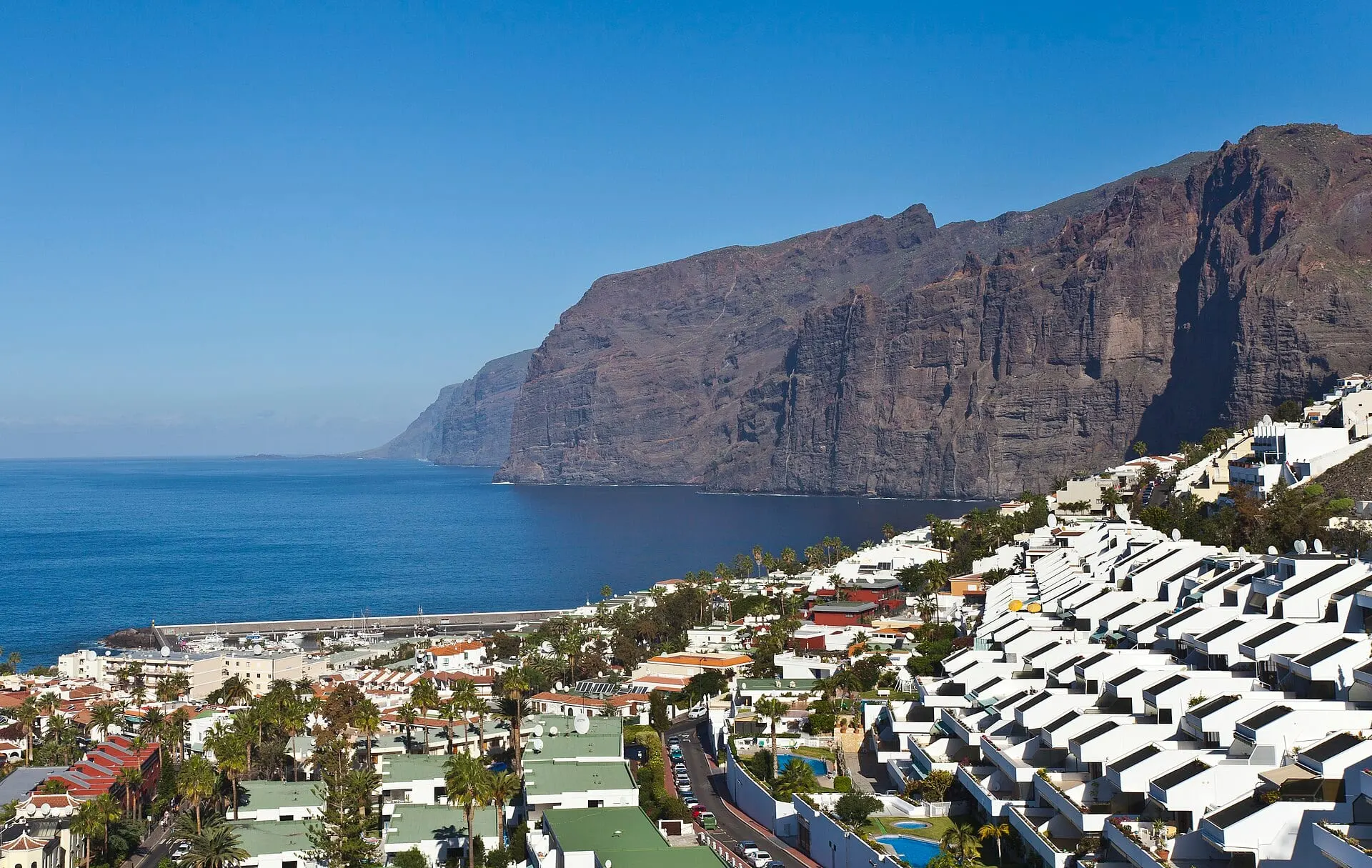
The view back to the cliffs of Los Gigantes and across the water to La Gomera is part of the outing.
There are three main ports. Los Cristianos and Puerto Colón in Costa Adeje serve the big southern resorts and have the widest choice, from large catamarans to small yachts. Los Gigantes on the west coast adds the sight of its sea cliffs to the trip.
Many tours collect you from your resort, so the port matters less than the boat and the length of the trip. Longer yacht trips add a swim stop and snorkelling.
GetYourGuide
A whale and dolphin trip run on a no-chase basis, for a quieter encounter with the resident pilot whales and dolphins.
GetYourGuide
A yacht trip to look for whales and dolphins, with a stop to swim and snorkel.
GetYourGuide
A trip at sea on the Echo yacht off the coast of Tenerife.
Look for the Blue Boat flag. It shows the operator holds the official authorisation for whale watching and that its crew can explain what you are seeing. The tourist board publishes a list of licensed boats.
All boats follow the same rules: they keep at least 60 metres from the animals, stay with them for no more than 30 minutes, avoid crowding around a group, and never feed them or let anyone swim with them. Smaller eco trips that promise not to chase the animals are a good fit if you want a quieter, slower encounter.
GetYourGuide
A whale and dolphin trip run on a no-chase basis, for a quieter encounter with the resident pilot whales and dolphins.
A yacht trip turns whale watching into a longer outing, with time to swim and snorkel in a sheltered bay. If you would rather see the sea from below without learning to dive, an underwater walk with a helmet is another way in. Either pairs well with an afternoon on the beach in Los Cristianos or Costa Adeje.
GetYourGuide
A yacht trip to look for whales and dolphins, with a stop to swim and snorkel.
GetYourGuide
Walk on the seabed wearing a helmet that supplies air, with no diving experience needed.
Any time of year. Pilot whales and bottlenose dolphins are resident off the south-west coast, so trips run all year. Some visiting species have seasons: spotted dolphins from autumn to late spring, common dolphins in winter and sperm whales in spring.
Los Cristianos, Puerto Colón in Costa Adeje and Los Gigantes. Many operators include pickup from the southern resorts.
No. Swimming with whales and dolphins, and feeding them, is not allowed. Yacht trips often add a separate swim and snorkel stop away from the animals.
Authorised boats fly the Blue Boat flag, and the tourist board publishes a list of licensed vessels.
Boats must stay at least 60 metres away and spend no more than 30 minutes with the animals.
Sources: webtenerife.co.uk, webtenerife.co.uk, webtenerife.co.uk. Checked October 2026.